
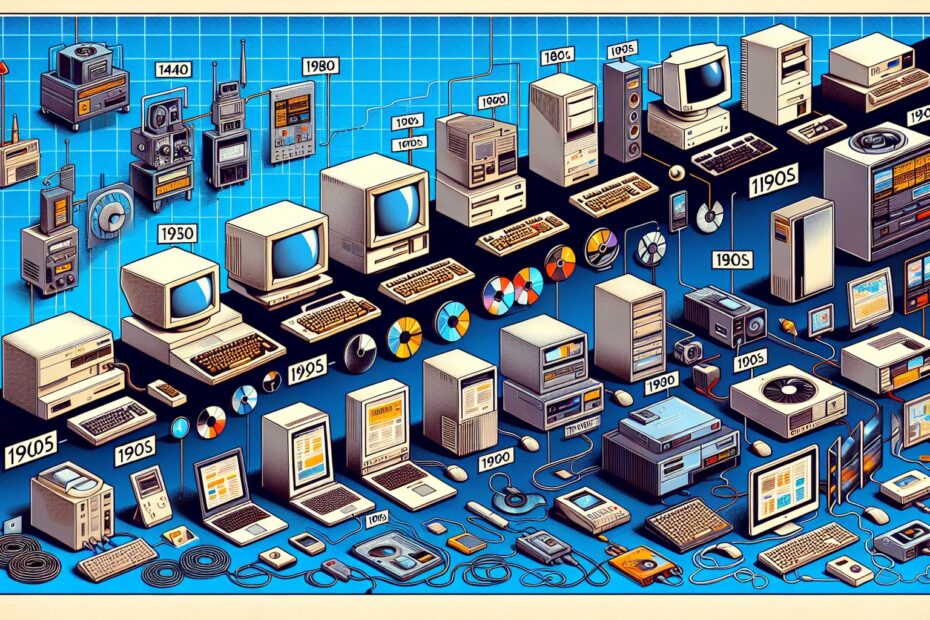
There is no denying that computers have become an integral part of our lives, revolutionizing the way we work, communicate, and live. From the colossal mainframes of the 1940s to the sleek and powerful devices we carry in our pockets today, computers have come a long way. In this article, we will explore the evolution of computers and their impact on the business world.
The Early Days: Mainframes and Minicomputers
The first computers were enormous machines that occupied entire rooms. Known as mainframes, they were capable of processing large amounts of data and were primarily used for scientific and military purposes. Mainframes were expensive, complex, and required specialized knowledge to operate.
In the late 1960s and early 1970s, minicomputers emerged as a more affordable and compact alternative to mainframes. These smaller machines played a crucial role in the development of the personal computer (PC). While still not accessible to the general public, minicomputers paved the way for the democratization of computing power.
The PC Revolution
The advent of personal computers in the 1980s brought about a dramatic shift in the way businesses operated. PCs, such as the iconic IBM PC, became more affordable, user-friendly, and powerful. Suddenly, computing power was no longer confined to large organizations; small businesses and individuals could also harness its capabilities.
Spreadsheets, word processors, and databases became essential tools for businesses, streamlining operations and increasing productivity. The PC revolution empowered workers to perform tasks more efficiently, leading to significant cost savings and increased competitiveness.
The Internet Era and Networked Computing
The rise of the internet in the 1990s marked another milestone in the evolution of computers. The ability to connect computers and share information seamlessly transformed the way businesses operated. Email became the primary mode of communication, replacing traditional mail. Companies could now reach a global audience through websites and establish an online presence.
With the proliferation of networks, businesses adopted Local Area Networks (LANs) and Wide Area Networks (WANs) to connect their computers and share resources. This enabled collaborative work environments, allowing employees to communicate and collaborate on projects regardless of their physical location.
The Mobile Revolution
In recent years, mobile devices have become ubiquitous, profoundly impacting the business landscape. Smartphones and tablets offer tremendous computing power in a portable package, allowing professionals to work on the go. Business applications and cloud-based services enable access to critical information and resources anytime, anywhere.
Mobile devices have also revolutionized customer interactions. E-commerce has skyrocketed, as customers can now browse and purchase products and services with just a few taps on their screens. Mobile marketing and advertising have become essential strategies for businesses looking to reach their target audience effectively.
The Cloud and Big Data
As businesses generate an ever-increasing amount of data, the need for efficient storage and processing capabilities has become crucial. Enter cloud computing and big data. Cloud services offer businesses the ability to store and access data remotely, eliminating the need for physical infrastructure and reducing costs.
Moreover, big data analytics technologies provide valuable insights into customer behavior, market trends, and operational efficiency. Businesses can now make data-driven decisions to enhance productivity, streamline operations, and gain a competitive edge.
The Future of Computers: AI and Machine Learning
Looking ahead, artificial intelligence (AI) and machine learning present exciting opportunities and challenges for businesses. AI-powered technologies, such as virtual assistants and chatbots, can automate tasks, improve customer service, and drive efficiencies.
Machine learning algorithms, fueled by ever-growing amounts of data, enable businesses to automate complex decision-making processes and predict future outcomes. From personalized recommendations to fraud detection, machine learning is transforming industries across the board.
Conclusion
From the bulky mainframes of the past to the sleek devices we rely on today, computers have come a long way. They have revolutionized the business world, enabling increased productivity, improved communication, and enhanced decision-making. As technology continues to evolve, businesses must adapt and embrace the opportunities it affords. Whether it be harnessing the power of the cloud, leveraging big data, or embracing AI, keeping pace with the ever-changing computer landscape is essential for continued success.