
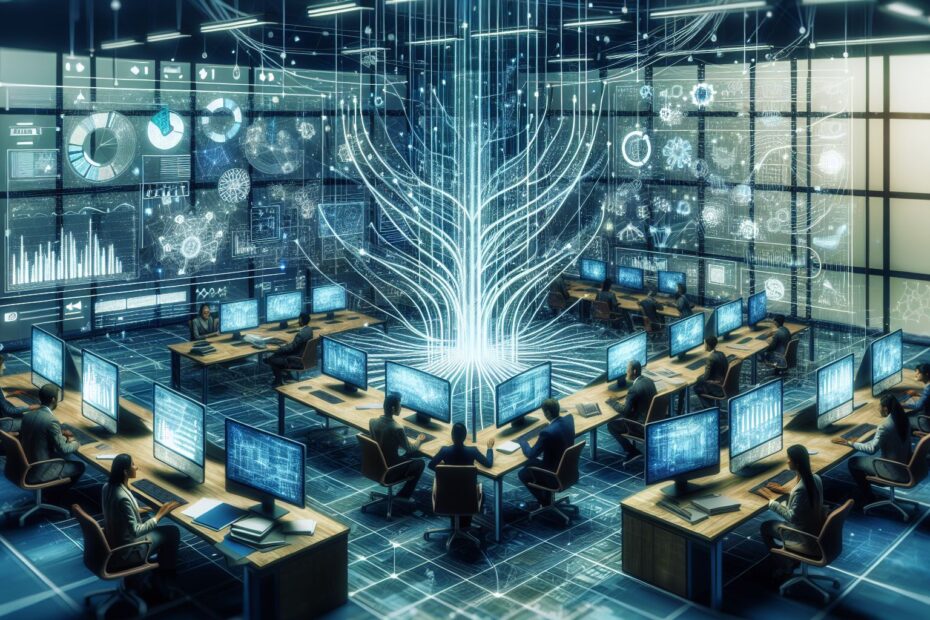
We live in a world where computers have become an essential part of our daily lives. Whether it’s in the workplace or at home, these machines play a vital role in helping us accomplish tasks efficiently and effectively. In this article, we will explore how computers have revolutionized the business world, the various types of computers available today, and their significant impact on productivity and innovation.
The Evolution of Computers in Business
Over the past few decades, computers have transformed the way we work and conduct business. Gone are the days of paper-based systems and manual processes. Today, businesses heavily rely on computers for almost every aspect of their operations. From data entry and analysis to communication and collaboration, computers have revolutionized the way we do business.
Before the widespread use of computers, companies had to maintain huge volumes of paperwork and files, which often led to inefficiencies and errors. Imagine manually sorting through piles of documents or spending hours performing complex calculations by hand. It was a time-consuming and arduous process.
However, with the advent of modern computers, businesses can now automate repetitive tasks, store vast amounts of data, and execute complex operations within seconds. This has resulted in a significant increase in productivity, allowing companies to operate more efficiently and effectively.
Types of Computers Used in Business
There are various types of computers used in the business world today, each serving a specific purpose. Here are some of the most common types:
1. Desktop Computers
Desktop computers are the most traditional and widely used type of computer in business settings. They consist of a central processing unit (CPU), a monitor, a keyboard, and a mouse. Desktop computers offer powerful processing capabilities and are suitable for intensive tasks such as graphic design, video editing, and software development. While they are not portable, their robust performance makes them ideal for office environments.
2. Laptop Computers
Laptops are portable computers that offer similar functionalities to desktop computers but in a smaller form factor. They are designed to be lightweight and easily transportable, making them ideal for business professionals who need to work on the go. With their built-in battery, laptops provide the flexibility to work from anywhere, whether it’s a coffee shop or an airport lounge.
3. Servers
Servers are high-performance computers designed to manage and store data for multiple users or devices within a network. They are typically used by medium to large businesses to host websites, manage databases, and facilitate collaboration. Servers provide centralized control and security, ensuring that critical business data remains safe and accessible to authorized individuals.
4. Cloud Computing
Cloud computing refers to the practice of storing and accessing data or applications over the internet instead of relying on a local computer or server. It offers businesses flexibility, scalability, and cost-effectiveness. With cloud computing, companies can take advantage of powerful computing resources without the need to invest in expensive infrastructure or maintenance.
The Impact of Computers on Productivity and Innovation
Computers have had a profound impact on productivity and innovation in the business world. Here are some key ways they have transformed industries:
1. Automation of Tasks
Computers automate repetitive and mundane tasks, allowing employees to focus on more complex and creative work. For example, software applications can automate data entry, generate reports, and handle inventory management, reducing human error and saving time.
2. Improved Communication and Collaboration
Computers have revolutionized communication and collaboration within businesses. With the rise of email, instant messaging, and video conferencing, employees can connect and work together seamlessly, regardless of their physical location. This has led to increased efficiency, faster decision-making, and the ability to work across time zones.
3. Data Analysis and Decision-Making
Computers enable businesses to collect and analyze vast amounts of data, providing valuable insights for decision-making. Through advanced analytics and machine learning algorithms, companies can identify trends, predict customer behavior, and optimize processes. This leads to informed decisions, which can significantly impact a company’s bottom line.
4. Enhanced Creativity and Innovation
Computers have become essential tools for creative industries such as graphic design, architecture, and film production. Advanced software applications empower professionals to push boundaries and bring their ideas to life in ways that were previously unimaginable. This has led to a surge in creativity and innovation across industries, fostering growth and competitiveness.
Conclusion
In conclusion, computers have become the cornerstone of the modern business world. They have transformed the way we work, communicate, collaborate, and innovate. With their power to automate tasks, improve productivity, and enable informed decision-making, computers have become indispensable tools for businesses across industries. As we continue to embrace technological advancements, computers will undoubtedly play an even more significant role in shaping the future of business. So, whether you’re running a small startup or managing a large corporation, embracing the power of computers is crucial for staying competitive and thriving in the digital age.