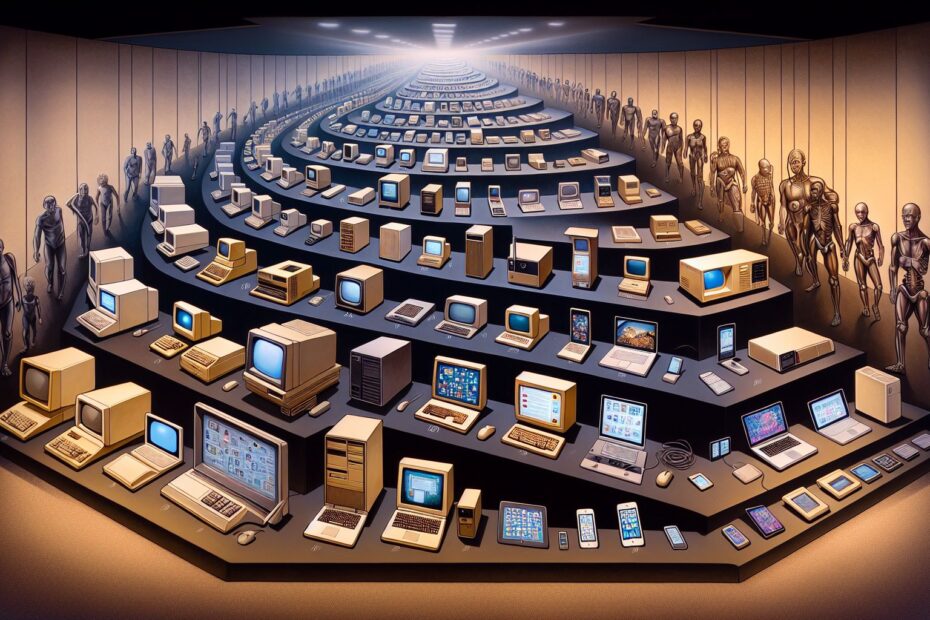
Computers have become an essential part of our daily lives, both personally and professionally. From the early days of bulky mainframe computers to the sleek and portable laptops we use today, the evolution of computer technology has been nothing short of remarkable. In this article, we will explore the history of computers, how they have shaped our world, and what the future may hold for this ever-evolving technology.
The Early Days: Mainframes and Minicomputers
The first computers were massive machines that required an entire room to house. These mainframes were used primarily by large organizations and government agencies to perform complex calculations and data processing. They were not accessible to the average person and required specialized training to operate.
As technology advanced, minicomputers were developed, which were smaller and more affordable than mainframes. This allowed smaller businesses and universities to utilize computer technology for various tasks, such as data analysis and simulations.
The Personal Computer Revolution
The introduction of the personal computer in the 1970s marked a significant shift in the computer industry. Companies like Apple and IBM made computers more affordable and accessible to the general population. These early PCs were still quite large and cumbersome compared to today’s standards, but they laid the foundation for the computers we use today.
The development of the graphical user interface (GUI) by Apple in the 1980s revolutionized the way people interacted with computers. Instead of typing commands into a terminal, users could now navigate their computer using a mouse and visual icons. This made computers more user-friendly and opened up a whole new world of possibilities for software developers.
The Rise of Laptops and Mobile Devices
As technology continued to advance, computers became smaller and more powerful. Laptops were introduced in the 1990s, which allowed people to take their work on the go. This newfound portability revolutionized the way we work, enabling employees to be more productive and efficient outside of the office.
In recent years, smartphones and tablets have become the primary computing devices for many people. These mobile devices offer the same functionality as traditional computers but in a more compact and convenient form factor. With the rise of cloud computing, people can now access their files and applications from anywhere in the world, further blurring the lines between work and personal life.
The Future of Computing
As we look to the future, the possibilities for computer technology seem limitless. Artificial intelligence (AI) and machine learning are transforming the way we use computers, enabling them to perform complex tasks and make decisions autonomously. Quantum computing, which leverages the principles of quantum mechanics, promises to revolutionize computing power and speed, opening up new opportunities in fields such as cryptography and drug discovery.
The Internet of Things (IoT) is another emerging technology that will continue to shape the future of computing. By connecting everyday objects to the internet, we can create a network of smart devices that can communicate and collaborate to make our lives easier and more efficient. From smart homes to autonomous vehicles, the IoT has the potential to revolutionize the way we live and work.
Conclusion
The evolution of computers has been nothing short of extraordinary. From the days of mainframes to the era of laptops and mobile devices, computer technology has transformed the way we work, communicate, and live. As we look to the future, the possibilities for computer technology seem endless, offering new opportunities and challenges that will continue to shape our world for years to come.