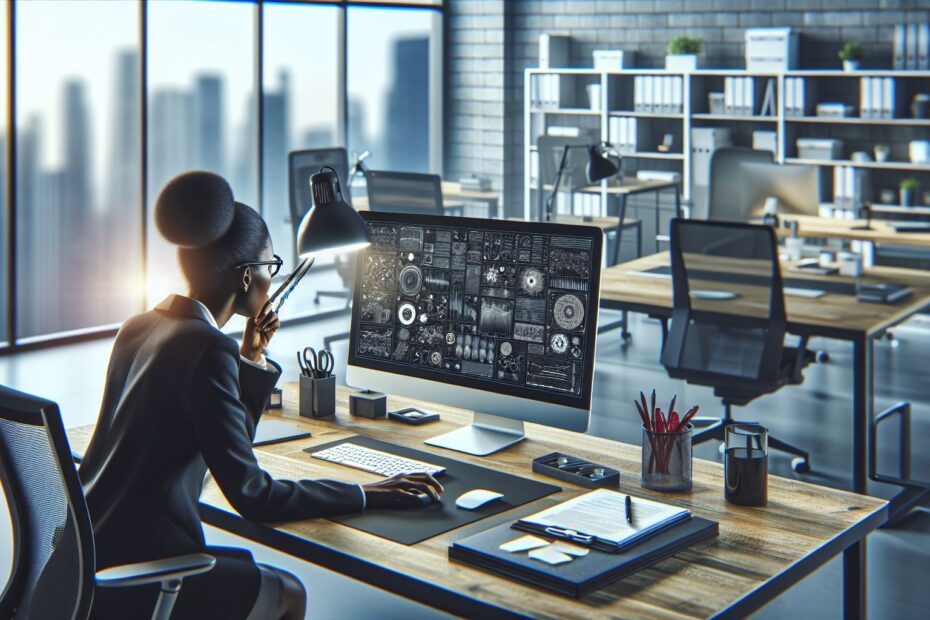
Computers. Take a moment and look around you. Whether you are plopped on your home office chair or reading this from the subway ride home, you can’t escape them. These ubiquitous machines have firmly implanted themselves on literally every desk in every office in every firm across the globe. But have you ever stopped and wondered, “How do these incredibly complex, yet eerily simple machines work, and what’s their story?”
We sure have, and if you’re here, it seems like you have too. In this article, we are going to unravel the mysteries behind the humble desktop, and who knows? By the end, you might just feel a little more confident about troubleshooting that next pesky printer error.
History and Evolution: A Look Back in Time
In 1936, long before the advent of the flashy tablets and smartphones we know today, a gentleman named Konrad Zuse gifted humanity the Z1, considered to be the world’s first freely programmable computer. However, it was in the 1970s that computers began to resemble the devices we know today. This era saw the advent of the first personal computers, typified by models like the Xerox Alto in 1973. Fast forward to today, and computers have transformed into sleek, portable powerhouses that integrate unimaginable levels of technology and convenience.
Cracking the Code: Anatomy of a Computer
So, what goes on behind the buzzes, hums, and sighs that your computer makes as you put it through its paces every day? At their heart, computers essentially consist of four components or ‘organs’ if you will – the Central Processing Unit (CPU), the memory unit, input devices (like your keyboard or mouse), and output devices (like your screen).
The Central Processing Unit (CPU)
Often referred to as the “brain” of the computer, the CPU carries out the commands you give to your computer. It processes functions, runs applications, and essentially keeps things moving.
The Memory Unit
Think of the memory unit as a very dedicated secretary for the CPU. It’s responsible for storing all the data and instructions that the CPU needs to function.
Input Devices
Ever thought about how typing on your keyboard translates into letters appearing on your screen? It’s all thanks to input devices! These mediums allow us to communicate with our computers and give them the necessary commands.
Output Devices
Last, but certainly not least, are the output devices. Imagine input devices’ antithesis. These devices include your screen or printer, which present the information we need in a useful and (hopefully!) comprehensible manner.
Operating Systems: The Unsung Heroes of Computing
Now we know the what’s, let’s talk a little about the who. As with any well-oiled machine, someone needs to be at the helm. In the world of computers, those unsung heroes are your operating systems (OS). Whether you’re team Windows, MacOS, or even Linux, it’s these systems that get the job done. Simply put, an OS manages all the software and hardware on your computer. Most importantly, it allows you to interact with your computer without knowing how to speak the computer’s language!
Computer Languages: The Unseen Dialogue
Behind every click, every drag and drop, there exists a flurry of dialogue that we as users remain blissfully unaware of. This dialogue forms the computer language or code. From the web pages we visit to the video games we play, code is the thread that breathes life into our digital world.
Looking to the Future: The Dawn of Quantum Computing
Looking ahead to the future, a significant buzzword stands out – Quantum Computing. Harnessing quantum physics’ principles, these computers could potentially offer unprecedented processing power. They promise to revolutionize fields like material science, cryptography, pharmaceuticals, and even artificial intelligence. Undoubtedly, the next frontier of computing is pulsating with the promise of the unknown!
Conclusion: Embracing a Computer-Savvy Future
To conclude, computers are an integral part of our lives, whether we like it or not. Understanding their functions, recognizing their parts, and knowing a little about their history can go a long way in demystifying these machines.
So, whether you’re a seasoned tech veteran or a curious novice, there’s always something fascinating to learn about these magical machines. As technology continues to evolve at breakneck speeds, it’s exciting to imagine what the future holds for these indispensable devices. One thing is for sure though – computers are here to stay, and we should all buckle up for the wild ride ahead!