
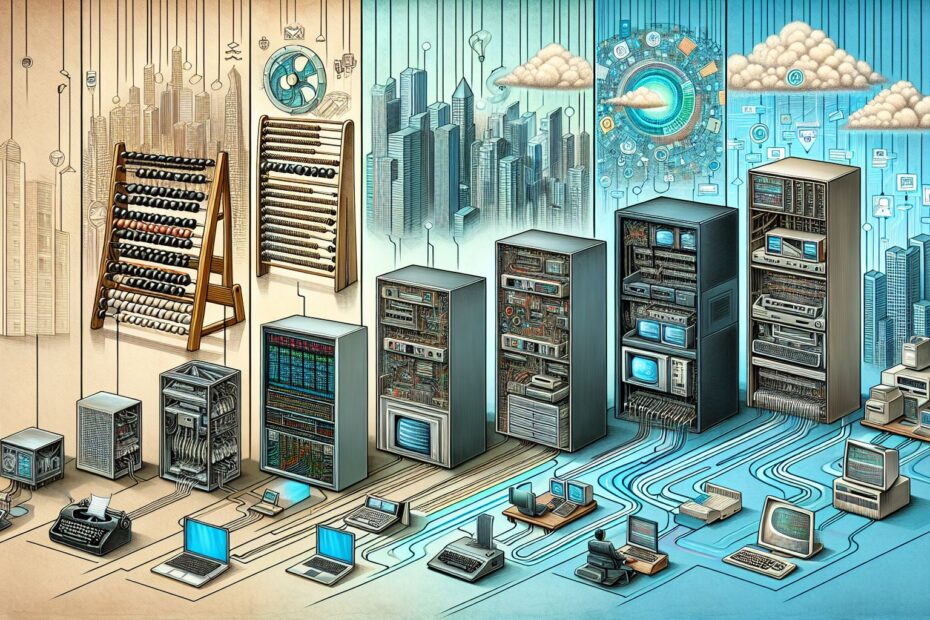
Welcome to the era where computers dominate every aspect of our lives, especially in the business world. From small enterprises to thriving corporations, computers have become an essential tool for success. As technology continues to evolve at a rapid pace, it’s important to understand the impact these machines have had on businesses. In this article, we will take a closer look at the evolution of computers and how they have revolutionized the way we work.
The Early Days: A Journey Back in Time
The birth of computers dates back to the mid-20th century, a time when ideas of futuristic machines were mere dreams. Early computers were massive and could only perform basic calculations. They were a far cry from the sleek and compact devices we use today. These early machines were primarily used by government agencies and research institutions, as they were expensive and not easily accessible.
The Rise of Personal Computers
In the late 1970s and early 1980s, personal computers (PCs) hit the market, marking a significant shift in the computing landscape. Companies like IBM, Apple, and Microsoft played a crucial role in making computers more user-friendly and affordable. Suddenly, individuals had the power to process data, perform complex tasks, and communicate more efficiently.
The rise of PCs brought a considerable change in the business sector. Tasks that previously took hours or days to complete could now be done in minutes. Businesses saw an increase in productivity and efficiency as routine operations became automated. Tasks like record-keeping, calculations, and data analysis were made simpler, eliminating the need for manual efforts.
Connecting the World: The Internet Revolution
As technology advanced further, the birth of the internet changed the way businesses communicate and operate. The World Wide Web transformed the concept of global connectivity, opening up endless opportunities for business expansion and collaboration. Suddenly, geographical barriers were broken as companies could establish a presence anywhere in the world.
With the rise of the internet, electronic commerce, or e-commerce, gained momentum. Online shopping and business transactions became the norm, eliminating the need for physical stores in some cases. The internet also provided businesses with a vast pool of information, allowing them to conduct market research, analyze consumer behavior, and develop targeted marketing strategies.
The Era of Mobility: Laptops, Tablets, and Smartphones
In recent years, the evolution of computers has taken a new turn towards mobility. Laptops, tablets, and smartphones have become indispensable tools for professionals on the go. The ability to work from anywhere, at any time, has become a necessity for businesses aiming to stay ahead in the competitive market.
The advent of mobile technology and powerful applications has transformed the way we collaborate, communicate, and manage business operations. Email, video conferencing, project management tools, and cloud storage have made it easier than ever for teams to work together remotely. Companies can now hire talented employees worldwide without the limitations of physical proximity.
The Future is Here: Artificial Intelligence and Automation
We now stand on the brink of another significant revolution in the world of computing – the era of Artificial Intelligence (AI) and automation. AI algorithms are being used to analyze vast amounts of data, allowing businesses to make informed decisions and predictions. Automation has made repetitive tasks a thing of the past, freeing up human resources for more critical and creative endeavors.
AI-powered chatbots and virtual assistants have become common in many businesses, providing instant customer support and significantly reducing response times. Advanced data analytics, machine learning, and robotics have revolutionized industries like healthcare, logistics, finance, and manufacturing.
Conclusion
Computers have undeniably transformed the way we do business. They have revolutionized productivity, efficiency, and communication on a global scale. As we continue to embrace new technologies, businesses must stay adaptable and embrace change. Whether it’s a large corporation or a small startup, computers have become a game-changer, leveling the playing field and opening up endless possibilities. The evolution of computers may be ongoing, but one thing is certain – they will continue to shape the future of business in unprecedented ways.