
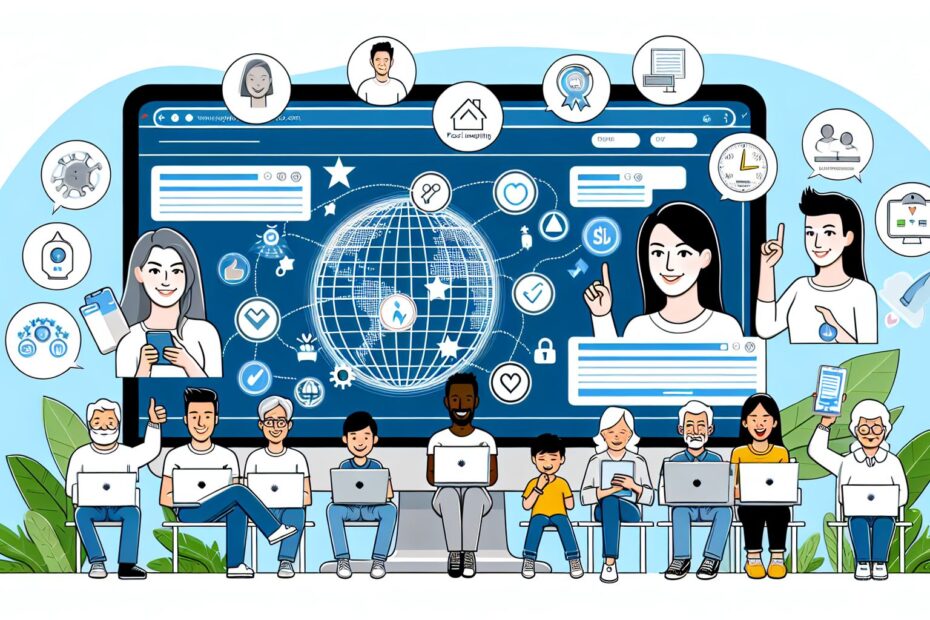
In today’s digital age, having a powerful online presence is crucial for any business. A website serves as a virtual storefront and a platform for customers to gather information, make purchases, and connect with the brand. Whether you’re a small local business or a multinational corporation, investing in a well-designed and user-friendly website is a necessity. In this article, we will explore the key reasons why a website is essential for businesses of all sizes and industries, and how it can contribute to their success.
The Role of a Website in Establishing Credibility and Trust
When potential customers come across a business, whether by word-of-mouth, advertising, or search engine results, one of the first things they do is look for the company’s website. A professionally designed website with a well-crafted layout, clear navigation, and high-quality content helps create a positive first impression. It gives legitimacy to the business, showcasing its professionalism and commitment to delivering a quality product or service.
Moreover, a website can provide a platform to showcase customer testimonials, case studies, and valuable industry resources, all of which work together to establish trust and credibility. Consumers are more likely to engage with a business that has an informative and trustworthy online presence, increasing the likelihood of converting leads into paying customers.
Boosting Brand Awareness and Reaching a Wider Audience
In a competitive market, it’s crucial for businesses to stand out from the crowd. A well-designed website can help create a strong brand identity, reinforce branding elements, and differentiate the business from its competitors. Consistent visual elements, such as color schemes, logos, and fonts, help to build brand recognition and make the business memorable.
Moreover, a website allows businesses to broaden their reach and tap into a global audience. With the internet connecting people from all corners of the world, having an online presence means that potential customers from different locations can discover and engage with the brand. This opens up new market opportunities and increases the chances of expanding the customer base.
Driving Traffic and Converting Leads into Customers
An effective website is not just visually appealing, but also optimized for search engines. Search Engine Optimization (SEO) techniques, such as keyword optimization, meta tags, and responsive design, can help improve a website’s visibility on search engine results pages. When a business appears higher in search rankings, it is more likely to attract organic traffic and potential customers.
Once visitors land on a website, user-friendliness becomes a paramount factor in keeping them engaged and encouraging them to take desired actions. A clutter-free design, intuitive navigation, and clear calls-to-action (CTAs) can guide users through the website and make it easier for them to understand the offerings. Furthermore, websites with integrated features like live chat support, personalized recommendations, and easy-to-use contact forms enhance user experience, lending credibility to the business and increasing the likelihood of conversions.
Enhancing Customer Service and Building Lasting Relationships
A website can serve as a 24/7 customer service representative, providing valuable information, answering frequently asked questions, and addressing concerns. Features like a knowledge base, support tickets, or chatbots can improve customer self-service and reduce the strain on human customer support agents. This not only provides convenience to customers but ultimately results in faster response times and improved customer satisfaction.
Furthermore, by implementing tailored email marketing campaigns, businesses can nurture customer relationships and keep their brand top-of-mind. Automated email sequences can be set up to send personalized messages, product updates, special offers, and relevant content based on the customer’s preferences and behavior. This helps to strengthen customer loyalty, encourage repeat purchases, and generate positive word-of-mouth referrals.
Keeping Up with Technology and Staying Competitive
Technology is constantly evolving, and businesses need to embrace these advancements to stay relevant in a fast-paced digital landscape. A website should be adaptable, scalable, and compatible with various devices, screen sizes, and browsers. Mobile responsiveness, for example, is now a critical factor since an increasing number of people access the internet using smartphones and tablets.
Additionally, incorporating emerging technologies can give businesses a competitive edge. Features like augmented reality (AR) for product visualization, artificial intelligence (AI) chatbots for enhanced customer interactions, or voice-activated searches provide unique user experiences and keep businesses ahead of the curve.
Conclusion
In the modern business landscape, a website is not just a luxury but a necessity. It is an invaluable tool for establishing credibility, reaching a wider audience, driving conversions, enhancing customer service, and staying competitive. Investing in a well-designed and user-friendly website is one of the best decisions a business can make to thrive in today’s digital era. So, let’s embrace the power of websites and leverage them to achieve long-term success and growth in the ever-evolving digital landscape.
Remember, your website is often the first impression a potential customer has of your brand, so make it count!
Are you looking for a well-designed and user-friendly website? Contact us today and let our expert team create a professional online presence that drives results!